This is Lady Knox geyser and it deserves some special mention. We were impressed when told that we had to be there by 10 AM so that we would be sure to see it go off. We joked that they must have someone throw the switch each morning. Well, not quite so much of a joke. It was discovered about 100 years ago by a group of prisoners who were clearing land nearby. Rather than having a cone like seen here, it was apparently more of a small hole and hot water. The prisoners used it to wash their clothes. They discovered that if they stuffed the hole with their clothes and tossed in soap, they would get a geyser. It actually has a natural cycle of 24 to 72 hours. They then built up the “cone” with rocks to try to get it to shoot higher. Over the years, their rocks have been covered with mineral deposits as seen here. They give it the traditional geyser appearance that most would expect. Fast forward to today. At 10:15 each morning a park staffer comes and gives a short talk about the history of the geyser. He also brings with him a bag full of surfactant which he dumps down the cone. Approximately 10 minutes later, following some frothing, you get what is seen here. It shoots up about 45 feet and lasts from 10 to 30 minutes. This has been a daily occurrence for the past 80 years. There are a couple of geysers in Yellowstone that I have always wanted to see go off. I wonder if we will see surfactant for sale in the gift shops there any time soon.
Wednesday, July 18, 2012
New Zealand, Tuesday, July 17, 2012: Lady Knox Geyser - Every Day at 10:15 AM
New Zealand, Tuesday, July 17, 2012 - Wai-O-Tapu Thermal Region
This was an area with a visitors center and walking trails. While this was a concentrated area of thermal activity, it is important to keep in mind that this was not an isolated area. There were multiple thermal areas all along the way and you would see steam rising all over the place; not to mention the enjoyable smell of sulphur.
New Zealand, Tuesday, July 17, 2012, Headed South from Rotorua: This is the way New Zealand is supposed to be!
We headed south from Rotorua towards the Wai-O-Tapu thermal basin. Tuesday was a beautiful day with no rain and scattered clouds. These pictures show what we saw for miles and miles (except the deer which we only say on two occasions). This is what I had envisioned for what New Zealand would be like and it was even better than imagined.
Mitai Village, Rotorua, New Zealand: Monday Evening, July 16, 2012
We were picked up from our hotel at about 6:00 PM for an evening program and traditional Hangi dinner. It was cold and rainy. So much so that a night hike activity that was to have been part of the evening was cancelled. That meant that we did not get to see any Kiwis (that national bird of New Zealand). These pictures show the beginning of our “ceremonial” welcome, two of the dancers and our Hangi meal coming out of the pit. The entertainment and program were great and the food was extremely good; the chicken, lamb, regular and sweet potatoes, corn, stuffing, etc. Plus a great selection of desserts. They had a covered area with a reconstructed village where the program was while there was separate tented area where we ate. Fortunately, they had propane radiant heaters so that we were comfortable. The evening concluded with a short walk near their spring and stream to see glowworms. They were much like fire flies, but they are in more of a continuous on position. You would look up on the banks of the hill and see clusters of hundreds of “stars” glowing.
New Zealand = Rainy Day - Monday, July 16, 2012
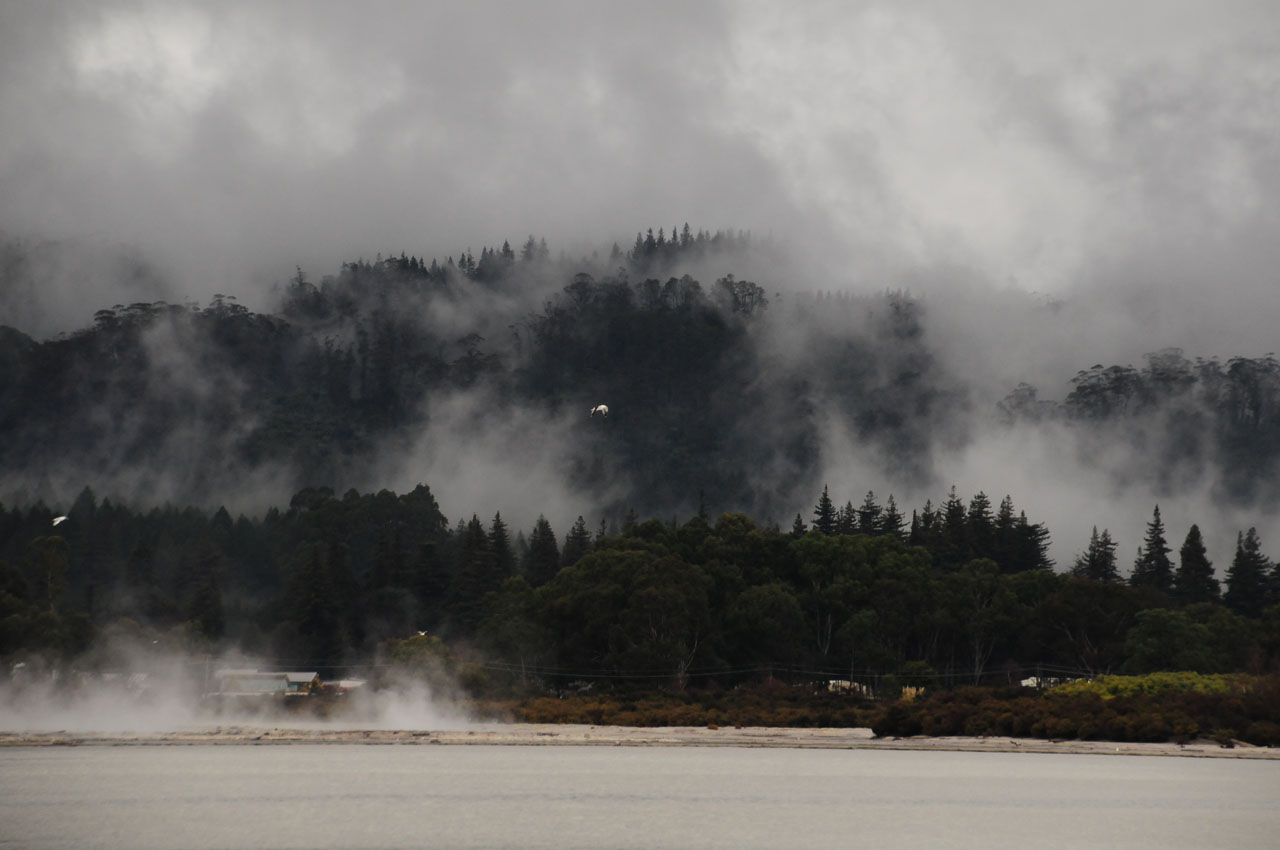
It poured down rain our first day in New Zealand. We drove from Auckland to Rotorua which was about a 200 kilometer (120 mile) drive. It was pretty much socked in all the way. Here are three pictures from Rotorua. The first is their museum. Next is a bird on the side of the road. Last is a picture looking across an inlet of the lake that shows a combination of thermal activity, clouds and rain.